AI Sentiment Platform
Mental Edge
From ML demo to a billable coaching portal
Model
Sentiment AI
Billing
Stripe
Auth
Kinde
Infra
AWS
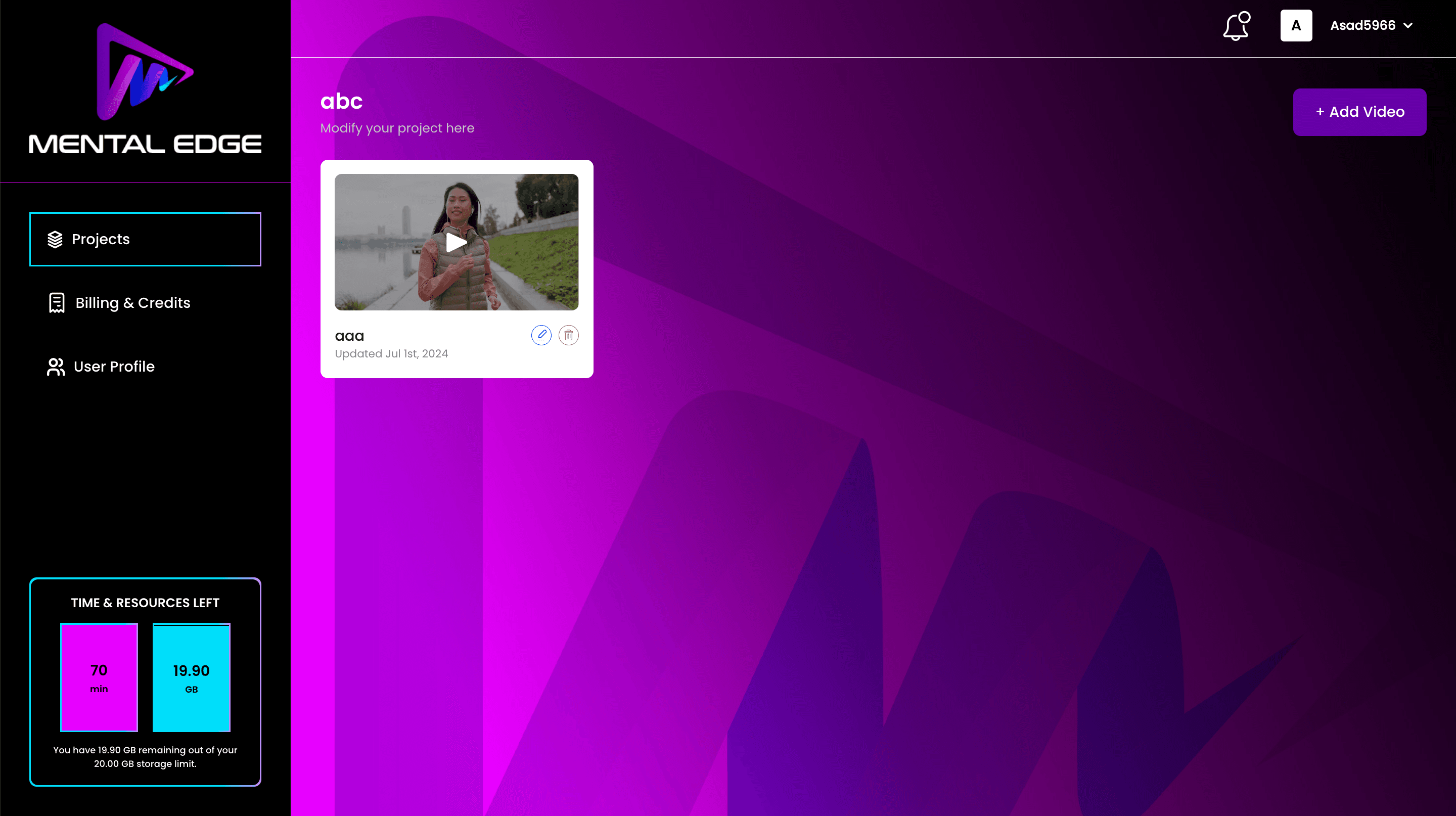
For a founder hiring: I turn AI capability into something you can charge for — auth, billing, and a portal users return to.
Executive summary
Mental Edge had sentiment analysis as capability. The business needed a product: a portal coaches and teams could log into, trust, and pay for. I focused on the product shell — UX for insights, auth, Stripe, and the paths that make AI output usable in a daily workflow.
Why this product existed
Coaches and teams needed emotional/sentiment insight from unstructured text — not a research notebook, but a repeatable product workflow they could buy.
Business problem
Accuracy alone doesn’t create revenue. Without auth, billing, and a clear insight UX, the model stayed a demo instead of a subscription business.
Why the existing approach failed
Raw analysis without product structure meant no account model, no purchase path, and no reason for non-technical users to return. Capability without packaging doesn’t close deals.
Users
Coaches and teams reviewing text-based signals; operators who need secure access and a billing path that supports GTM.
Constraints
- Model output had to become decisions people trust — not opaque scores
- SaaS shell (auth + billing) had to support go-to-market
- AWS hosting patterns that won’t surprise ops later
- Analysis latency acceptable for daily use
My responsibility
Frontend + product engineering — portal UX, auth, Stripe-ready SaaS shell
Architecture
React portal talking to a Django REST API on PostgreSQL, hosted on AWS. Kinde for auth, Stripe for billing. The product surface prioritizes insight workflows over exposing model internals.
Engineering decisions
Productize via authenticated portal + Stripe
Why: GTM needs accounts and a purchase path before more model tuning.
Rejected: Shipping more model accuracy first — doesn’t help if nobody can buy or return to a workflow.
Kinde for auth
Why: Faster, safer auth than building identity from scratch for an early SaaS shell.
Rejected: Custom auth early — high risk and distraction when the product still needed UX clarity.
Keep insight UX opinionated
Why: Coaches need decisions, not dashboards of raw model dumps.
Rejected: Exposing every score and parameter — impressive to engineers, confusing to buyers.
Hardest technical problems
- Turning model output into decisions coaches trust
- SaaS shell (auth + billing) that supports GTM
- AWS hosting patterns that won’t surprise ops later
- Keeping analysis snappy for daily use
Trade-offs
- Speed to a billable portal vs. deeper model work — we chose the path that unlocks revenue learning.
- Managed auth vs. full control — Kinde reduced build time; identity edge cases become vendor constraints.
- Opinionated insight UX vs. power-user flexibility — clearer for coaches, less room for analysts who want raw dumps.
Implementation
Built and shipped the portal experience around insights, wired auth and Stripe, and connected the Django/Postgres/AWS backend so the AI capability lived inside a product people can actually use.
How the product evolved
Moved from “show the model” to “sell the workflow” — packaging, access, and billing became first-class, not afterthoughts.
What I’d do differently today
I’d define success metrics for the insight UX earlier (what a coach does after seeing a result) and instrument those paths before adding more model surface area.
Business impact
Mental Edge could sell access, not just accuracy — a portal with a subscription path instead of a one-off analysis script.
- Paid portal with Stripe
- Secured user access (Kinde)
- AWS production environment
- Text → insight workflow teams can repeat
Lessons
- AI products fail at packaging more often than at models.
- Auth and billing are product features when you’re selling SaaS.
- If a non-technical user can’t act on the output, the model isn’t done.
Technology choices
- React
- Redux
- Tailwind
- Kinde
- Django REST
- PostgreSQL
- AWS
- Stripe